Results depend on scope, integrations and adoption.
The operating context
A clearer view of the whole operation.
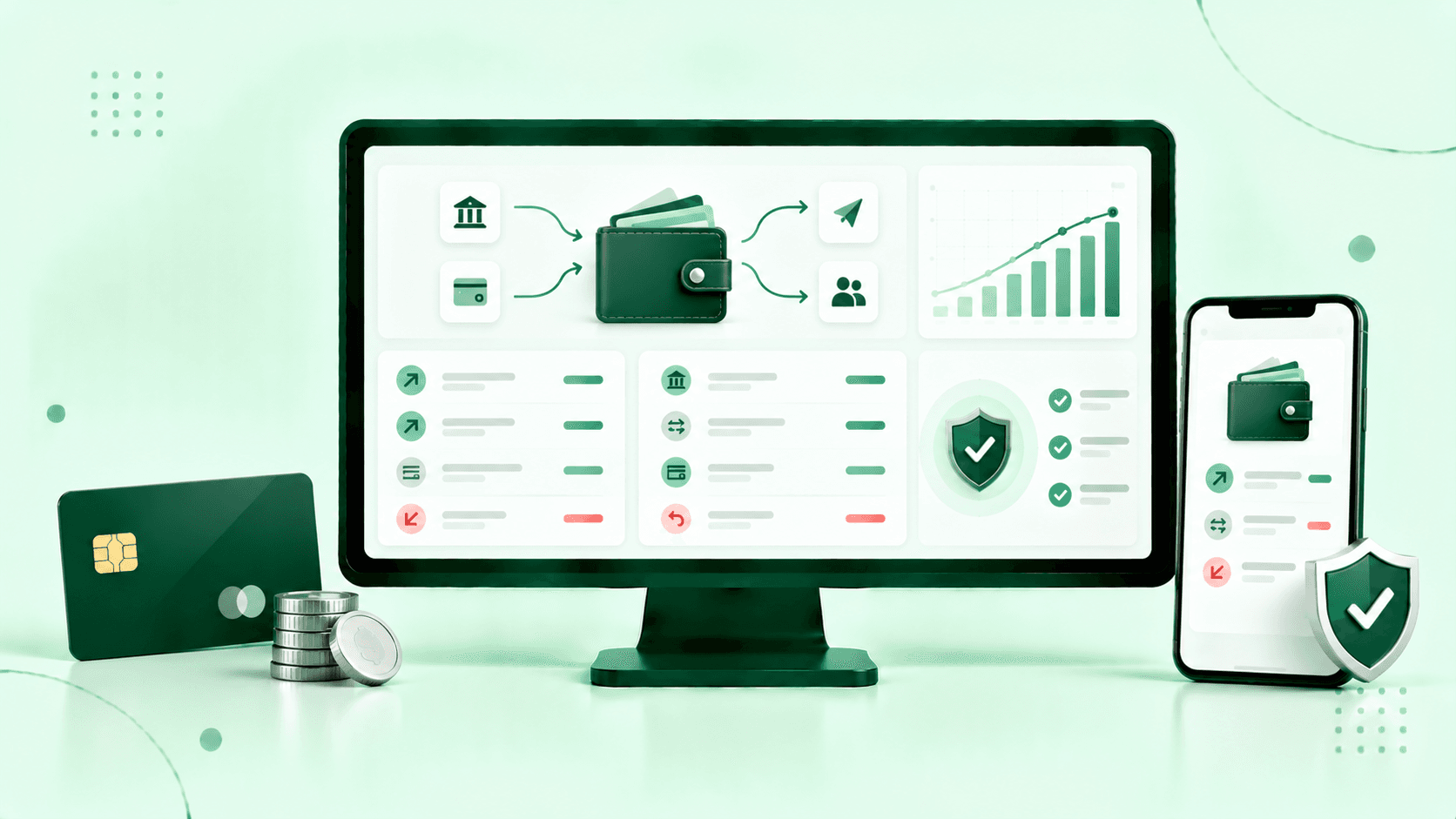
Digital wallets sit at the center of money movement for many modern products. Payments, transfers, rewards, and stored value all depend on accurate balances and reliable transaction handling. When the wallet foundation is weak, trust breaks quickly.
Where friction builds
Wallet systems fail when accuracy and scale are treated as add-ons
Many teams underestimate the complexity of wallet infrastructure. Ledger logic becomes fragile, reconciliation turns manual, and security and compliance gaps appear under real usage. As transaction volume grows, even small inconsistencies can lead to financial risk, user complaints, and audit issues.
Current approach
Updating balances without a ledger
Spreading transaction logic across services
Handling reconciliation manually
Adding compliance after launch
Operational impact
Balances become inconsistent
Reconciliation effort increases
Audit readiness remains weak
Transaction errors grow with volume
Inside the solution
The capabilities behind the operation.
Review the functional scope, then discuss the requirements specific to your team.
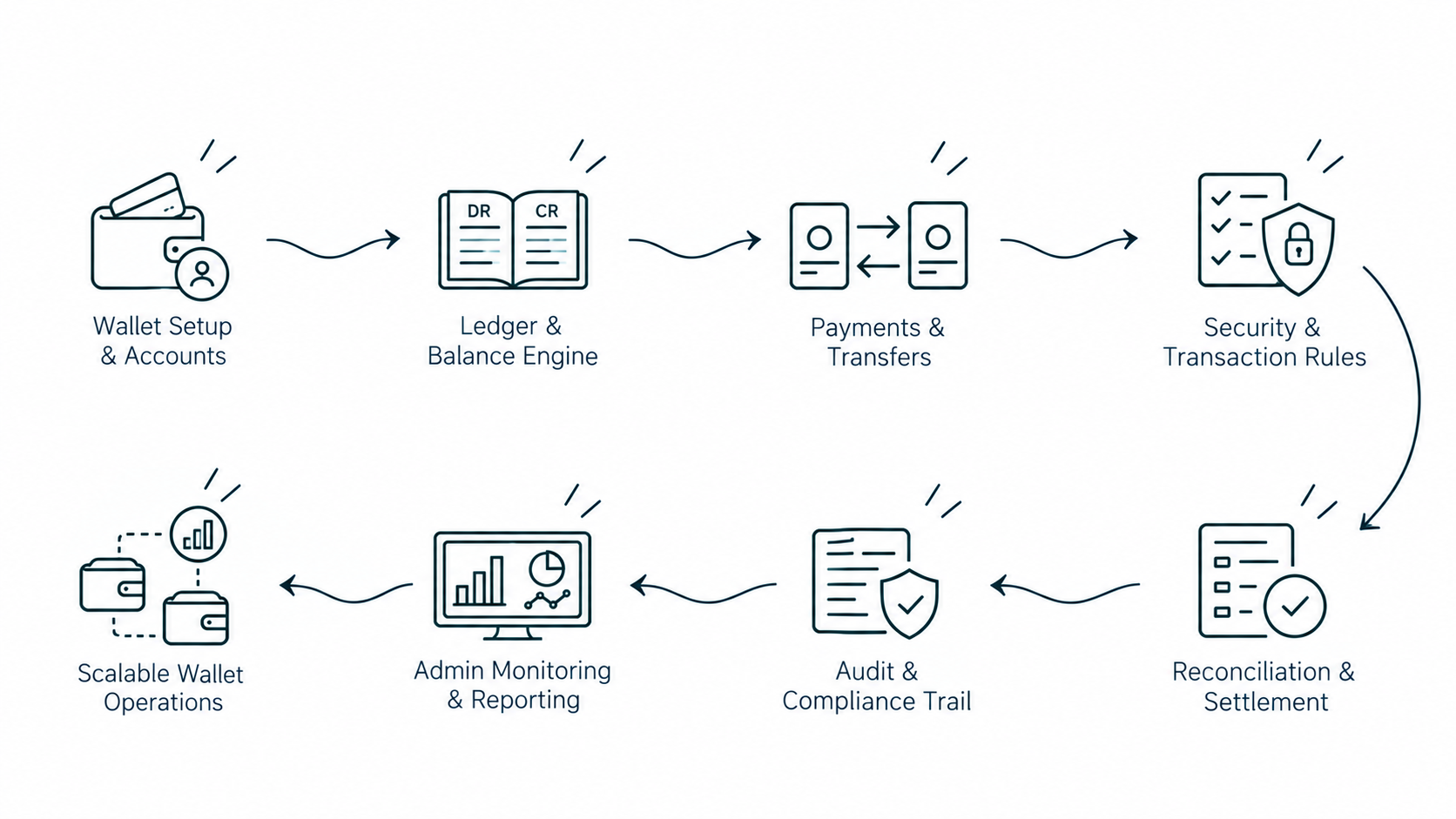
Wallet and balance management
User or account wallets with real-time balance calculation and multi-currency support.
Ledger and transaction engine
Immutable credit and debit records that ensure financial accuracy.
Payments and transfers
Wallet transfers, gateway integrations, refunds, and reversals.
Security and access controls
Authentication, authorization, limits, and transaction rules.
Audit logs and reconciliation
Traceable records to support audits, settlement, and compliance.
Admin and reporting tools
Dashboards for monitoring wallets, users, and transaction activity.
We design wallet systems as financial infrastructure, not just features. Balances, transactions, and audit trails are treated as core logic so the system remains reliable as users, volume, and integrations grow.
How it connects
The complete workflow, in one view.
Make an informed decision
Is this the right fit?
The right solution starts with the right operating requirements.
A digital wallet ledger records the financial entries behind every balance change. Instead of directly changing a wallet balance, deposits, transfers, refunds, fees, holds, and reversals are recorded as controlled debit and credit entries that can be traced back to the originating transaction.
Why is double-entry accounting useful for digital wallets?
Double-entry design helps ensure that money movement is balanced between accounts and leaves a clear transaction trail. It also makes reconciliation, financial investigation, error detection, and operational reporting easier as transaction volume increases.
How do digital wallets prevent duplicate transactions?
Idempotency keys, transaction identifiers, state validation, locking strategies, and controlled retry handling can prevent the same payment event or API request from creating multiple ledger entries. This becomes especially important when gateways or banks retry asynchronous callbacks.
How does wallet reconciliation work?
Reconciliation compares internal ledger entries with external payment, bank, payout, or settlement records. Differences such as missing transactions, duplicate entries, incorrect amounts, failed settlements, or delayed provider events can then be identified and routed for investigation.
Can this architecture integrate with banks and payment gateways?
Yes. A digital wallet architecture can integrate with banks, payment gateways, card processors, payout providers, and other financial services through APIs, webhooks, or supported banking interfaces. The wallet should record each external payment event against its internal transaction ledger, handle asynchronous states such as pending, failed, reversed, or settled, and reconcile provider records with internal balances. This keeps the wallet’s financial records controlled even when external providers return delayed callbacks, retries, or settlement differences.
Start with your requirements
Let’s define your next step.
Tell us what needs to work better, the systems you use, and the scope you have in mind.